
Opinion piece by Matte Kane, Union Representative. Opinions are his own.
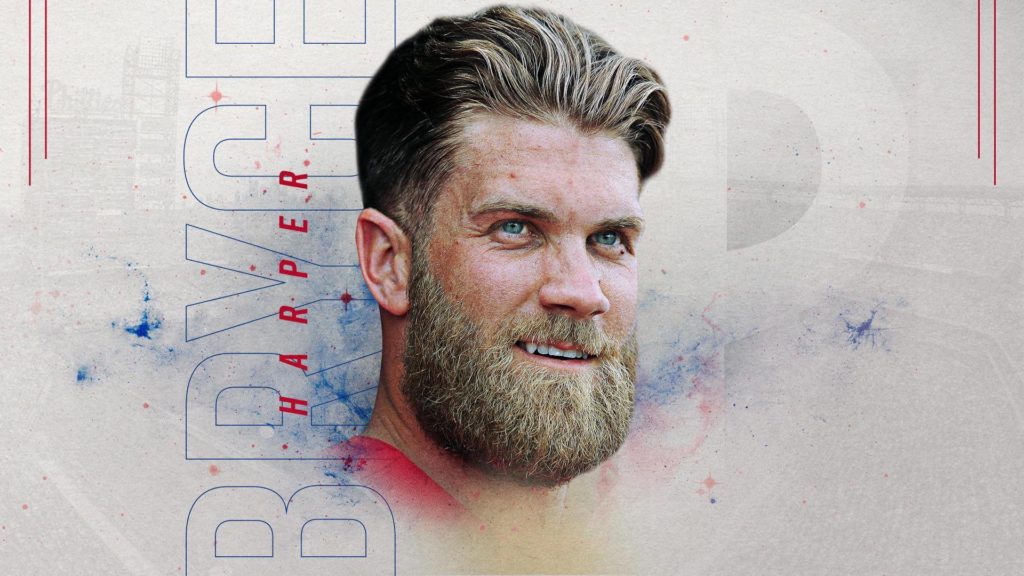
The last day of February closed with the afternoon announcement that Bryce Harper was coming to Philadelphia as a free agent, earning the heaviest contract in the history of North American professional athletics. A record $330 million dollars over thirteen seasons, thus ensuring this 6 time all-star and former league MVP would retire a Phillie. My first reaction wasn’t that of elated fan, hoping for some seating options down the first base line, but rather that of a Unionist contract geek. I needed to see the details of this contract and dissect it. Upon initial review, I was amazed to discover the wealthiest player in the history of the sport, held the line to shift the dichotomy in the union worker/employer relationship. I’ve heard the “Who cares… just another rich, pampered athlete counting his money,” nonsense. I’ve already heard the “Now I wont be able to afford to see a game,” stuff.
What I haven’t heard is: “Wow, this guy—who had the league at his mercy—did the right thing for the game, his fellow players, the fans, and the team ownership.”
A Look Back
A brief background into the history of Unionized baseball. Until 1958, players had failed to organize a collective bargaining unit (Union) in spite of at least five attempts dating back to 1885. Prior to 1958, the vast majority of Major League players were grossly underpaid versus the revenues they generated for owners. Players were still referred to as “property” of the franchise, while most worked off-season jobs to underwrite their incomes.
Some notable highlights since then include:
- 1966: The players have their first Collective Bargaining Agreement (CBA)
- 1972: Curt Flood of the St. Louis Cardinals is granted free agency by the Supreme Court
- 1980: Nolan Ryan signs the first million dollar contract
- 1982: Players pension fund expands to include all living former players
- 1996: Players union sues to retain the rights of players likeness, names, and numbers for licensing purposes to underwrite the pension fund. Answering the question …yes, even the wealthiest workers in the country still need a union.
Today, Harper’s distractors will opine, “Why does anyone deserve that kind of money for hitting a baseball?” The truth is, if the owners couldn’t afford to pay it, the contract wouldn’t exist. To that end, even the casual fan should rejoice in the fact that workers (players) are earning a proper share of the revenue “pie.” Rather than ownership groups amassing profits, contracts (like the one Harper and the Phillies just inked) signal a commitment to the fans who underwrite the payrolls that they will be putting the best possible team on the field for the money they are taking in.
A Unionist’s Perspective
The first point has to be Bryce Harper controlling his destiny as a player, husband, and father. It turns out that Harper refused at least two more lucrative deals (in terms of average annual value) to accept the Phillies offer. Things like longevity, security, happiness, and opportunity to expand his legacy are all reasons to assume influenced this pivotal decision. Free agency is an arduous process (as displayed by Harper’s 118-day saga this off season), and he decided the best deal for him was to never have to breach the prospect again. By agreeing to a 13-year, no-option-out and no-trade-clause deal, Harper has ensured his playing career will end in one city: Philadelphia. It appears knowing where his family will be raised and where they can take root was more important than the dollars (something we always preach; having a voice in your own destiny is often as valuable as the wages in a CBA).
Another pro-union facet of the contract is equity. At the onset, the scuttle around the league was that massive contracts will be paid for in stagnant wages for younger players and future players. The unique structure of this contract, front loading cash payments, and adding 3 years to carry out remaining payments all but ensures the franchise will come in under the league luxury tax (established by the Major League Baseball Players Association to prevent owners from “buying” super teams), thus enabling the team to resign high profile players and recruit other top flight free agents during the terms of the contract. This is a win-win-win for all parties involved: the fans are guaranteed a top tier team to support, Harper ensures he will have an opportunity to compete in many future post seasons by playing on a solid top to bottom team, and ownership is afforded the flexibility to construct a dynasty type team during these years.
What does a contract so “team friendly” signal? Weakness in the players union? A set back in the process of free agency growth? On the contrary, it appears to be one of those rare cases where both sides got it right! It signals to me a solid commitment to owners, players, and agents working together to do what is best for the game, rather than one individual entity of the sport. And that my friends is unionism at its finest.
Now that we’ve gotten that out of the way, let’s enjoy watching this kid smack some balls deep into the summer night at Citizens Bank Park.